Showing posts with label Beef. Show all posts

Thursday, December 8, 2011

A Bierocks Tradition

Although my childhood was spent living between Kansas, Texas and Minnesota, I consider myself to be a Kansas gal. I was born in Kansas. Both of my parents are from Kansas, and their parents' parents are from Kansas, and the majority of our living relatives remain within Kansas boarders today.  

Kansas. I think of this state as a humble gem at the center of America. Its soils are studded with golden limestone and frosted with waving wheat fields stretching as far as the eyes can see. These flat prairie lands accentuate the limitless sky above displaying cottony clouds and brilliant coral sunsets. Quiet gravel roads thread veins through old farming lands where immigrant European farmers once settled years ago. The only reminders of modern times in rural Kansas come from shiny combines juxtaposed with dilapidated barns.  Two of my great grandfathers farmed these fields. They were both Germans immigrants who were stubborn enough to tame the great plain's hard clay soils and unwieldily storms. They were determined to make a living for themselves and their families. I am part of the 4th generation, with fond memories of wheat and soybean harvests. Over so many years, however, many traditions from my German heritage have been lost with the land.  

And then again, there are Bierocks... 

Related to the pierogi.

My mother has been making these beef-and-cabbage stuffed buns for quick weeknight meals ever since I can remember. It has always been a family favorite. And very German! Well... to be more accurate, they are actually very Volga-German. In other words, they originated from ethnic German communities living along the Volga River in Russia. These peoples were allowed to continue practicing their religion and maintain their language. It wasn't until the 19th and early 20th centuries that many migrated to the Americas. Interestingly, while Joe and I made the long journey to Denver via I-70 (straight west through Kansas flint hills) we discovered that there are a few obvious reminders of the old Volga-German communities, such as a grand Cathedral erected from the land's limestone deposits by Roman Catholic German settlers over a hundred years ago.  

Victoria, Kansas.

In order to keep such a small piece of my family's history alive, I want to share with you a Bierocks story. My mother's recipe calls for quick Jiffy dough (modernization for new generations of working women), however, I was craving something as traditional as possible. In doing a little internet searching, I stumbled across a wonderful newspaper article written about another Kansan who wishes to preserve such a tasty tradition. In fact, has made a successful business out of it! While reading this article, I realized that there are a few variations of Bierocks, for example, thin versus thick dough, or sauerkraut versus carrot additions.  I merged his recipe with my mother's to create a recipe (below) that most aligns with my personal childhood memories of a family favorite.  

My Bierocks story:

Prepare the sweet yeast dough first.
While dough is rising, brown the ground beef in a large skillet.
While meat is cooking, shred cabbage and carrots, and dice
up some purple onion. 
Add the veggies to cook in the meat fat until tender.
The risen dough is now ready for sectioning.
This is how I keep my dough "warm" despite a cold apartment:
I heat up an inch of water in a large pan, turn off the heat,
and then set my dough bowl on top.
Grab a handful of dough and spread it thin.
Fill dough with meat and cabbage mixture.
Let your raw Bierocks set so that the dough can rise
a bit once again.
Bake your buns and then brush their tops with butter!
Enjoy with mustard...
or ketchup if you feel like being more American!

Traditional Family Bierocks
Makes 12
Serves 4 (most individuals consume 2-3 buns each).

Dough:
1 Tbsp. dry yeast
1/3 cup warm water
2.5 Tbsp. sugar
1/2 stick butter, melted
2 1/3 cups flour ("Yay" for wheat!)
1/3 cup milk
1/4 teaspoon salt

Filling:
1 lb. ground beef
1/3 head cabbage, shredded and chopped
1/2 purple onion, diced
2 carrots, peeled and shredded
Salt and pepper, to taste

First, prepare the dough. Combine yeast and sugar in warm water in a large bowl until dissolved. Set aside until foamy (5-10 minutes).  Add melted butter, then flour, then milk and salt. Add more milk if dough gets too dry.  After mixing, knead until smooth (about 10 minutes). Transfer to a greased bowl, cover with a tea towel, and let rise until doubled (about 1 hr).

While dough is rising, cook the filling. First brown beef in a large skillet over medium heat. Drain excess fat (if any). Add veggies and salt and pepper to taste.  Turn heat down to medium-low heat and cook slowly until veggies are tender. Remove from heat and set aside until dough is ready for stuffing.  Note: if you like sauerkraut, add about 1/2 cup now.


To assemble Bierocks, portion dough into 3-ounce balls (about 1 small handful). Roll out flat to about 1/2 inch thickness. Place 1/2 cup of meat mixture into the center of each, pull corners of the dough over the filling and pinch together in a nice seam. Place stuffed dough balls, seam side down, onto a lightly greased baking sheet and let rise another 20-30 minutes. During this time, preheat oven to 350 degrees. Bake for 25 minutes, or until browned. After removing buns form the oven, brush the tops with butter. Serve with spicy mustard and a pint of wheat ale.

Note: Bierocks keep well in the fridge for up to 3 days after preparation.  I love making extra to bring to work because they are easy to take on the go!

Sunday, September 11, 2011

Squash Mutt

What do you get when you cross a squash and a zucchini?  You get a yellow-green freckled orb the size of a small cantaloupe. It has a scratchy stem and when sliced open, it contains seeds like a pumpkin and tender golden flesh.  I was lucky enough to adopt my very own squash mutt from the farmer's market! However, it sat on my counter for some time before I could make up my mind for how to cook it. I liked admiring my unique vegetable, and its mixed pedigree made it a bit confusing for me to decide on a recipe. I wanted to make something as unique as it was.  I decided on this...

Spicy, stuffed squash!
And could that really be a side of uni-corn?!  :)
Boiled, seasoned sweet corn.
Just add butter, salt, pepper and chili powder with fresh parsley.

This was truly a farm-to-table inspired dinner. The corn was brought home by Joe, who was gifted three husks that were freshly picked from someone's garden. The squash mutt was from the farmer's market, the bowl of sweet cherries from Colorado growers, and the side of craft cheese (gorgonzola) made for such a tasty meal.  Here is my recipe for my stuffed squash mutt, however, you can use oversized zucchini (they are only in-season a bit longer) or your favorite winter squash.

Spicy Stuffed Squash
Serves 2

1 large zucchini, squash, or squash mutt
1/2 lb. ground beef or bison (try grass-fed, organic)
1/2 onion, chopped
1/2 sweet pepper, chopped
1 cup corn (can use frozen)
1 cup stewed tomatoes
2 tbsp. mild chili peppers, seeded and chopped
1 tbsp. chili powder
1 teaspoon fresh oregano, or 1/2 tsp. dried
1/2 teaspoon cumin, ground
1/8 cup bread crumbs
1/2 cup cheese, shredded (Monterey Jack or sharp cheddar, recommended)
2 tbsp. fresh cilantro or parsley, chopped

Preparation: Split squash in-half (lengthwise if using zucchini), scoop out seeds and discard. Carefully cut away the flesh from the outer skin, leaving about 1/2 an inch thick. Reserve the flesh and the shells! Preheat oven to 350 degrees F, and place squash shells into a greased baking dish for later. 
To make the filling: Cook the meat, onion, and sweet pepper in a large frying pan over medium heat until meat is browned. Drain off fat (if any). Then add the squash flesh, corn, tomatoes, chili peppers, chili powder, oregano, and cumin. Turn heat to high and let boil, stirring often, until liquid evaporates (about 5 minutes). Add the bread crumbs, half of the cheese, and fresh cilantro/parsley and season to taste with salt and pepper. Mix well and remove from heat.
Assembly:  Fill the empty squash shells with the cooked meat mixture and bake in 30-35 minutes. Then sprinkle the remaining cheese over stuffed squash and bake for another 15 minutes or until cheese begins to brown. Remove from the oven and let stand 5 minutes before serving. Garnish with additional fresh cilantro/parsley (optional) and enjoy!  You can eat the skins of zucchini and squash mutts but the hard exterior or winter squashes might not be so pleasant.

You should try stuffed squashes, too! Besides, they seem to be all the rage this season. Check out this link, from the New York Times, for more inspiring recipes.

Sunday, July 10, 2011

Italy Part 6

Denver's weather pattern has shifted from being consistently scorching hot to having repetitive popcorn thunder bursts in the afternoon and evenings. These storms, with their cool wind gusts and thunder and rain percussion, arouse my desire to cook. Last Friday, this is exactly what happened and I opened to the Italian section of my cookbook.  I decided on a dinner of:

Arancini (p. 90)
Chicken cacciatora (p. 122)
Shaved fennel salad (p. 98)

Fresh fennel, often mislabeled as "anise" in supermarkets
(like King Soopers on Friday morning)! I chose female bulbs, which
have smaller, thinner bulbs compared to males.  Taking the time to
select for fennel gender s is worth it because females contain a more
potent flavor profile.  This salad only uses the bulbs, but I saved the
top leaves for future recipes (very fragrant herb).  Did you know that
fennel is a main ingredient in absinthe and it is
speculated to have many medicinal benefits?   
Let's eat!! Cacciatora translates to "hunter's choice"
and the recipe varies by region.  Generally, this dish calls for
tomatoes, onions, and chicken. This particular recipe called for
pancetta, mushrooms, and dry vermouth too. I browned
the chicken in oil first, then simmered it until the meat fell
off the bones. So delicious! I just wish I had a big casserole
dish that the recipe called for.  I tried using my biggest frying
pan and it was just barely containing its contents  (it was so full,
the lid rested on the chicken)! Served with white rice.
Yes, rice is used in much of Italy.
A closer look at the Arancini (stuffed rice balls).
For this recipe, I was forced to buy saffron... ugh,
it is just so darn expensive! But I had to follow my rules, no
 cutting corners.  Tasting just one of these rice balls
made me glad I bit the bullet. The rice was cooked with the
saffron, making it a bright yellow, sticky mess. The rice
was then combined with parmesan and eggs, stuffed
with fried minced beef, onions, oregano, and wine.
Once the balls were formed, they were rolled in white flour,
dipped in more egg and then coated in bread crumbs.
After brief refrigeration, they were dropped into a
hot pan of oil for 3 minutes until golden brown.

The stuffed rice balls required frying in oil, and I think this is a good chance to make a note about choosing oils for frying. Every oil is not the same. For Italian cooking, they use primarily olive oils, and if you ever stand in the baking isle of the grocery store to pick out an olive oil you have probably noticed the spectrum of types to choose from. There is "extra virgin" to "extra light". What does this really mean? It has a lot to do with processing, as well as ripeness (acid content) of the olives. Extra virgin olive oil is the least processed, meaning that the olives are pressed once without chemicals or heat. This is the highest quality, and most expensive, type of olive oil to purchase because it requires more olive input (usually less ripe ones); however it embodies an intense, fruity and almost buttery flavor. Extra light olive oil is composed of a filtered combination of refined olive oil with small amounts of virgin olive oil added back. The "light" descriptor doesn't come from having less calories, but instead it describes the pale color of the oil relative its dark green extra virgin cousin. The two other types in between these two extremes include, "virgin" that is pressed similarly to extra virgin but has a higher acidity from riper olives, and regular olive oil that has an even higher acidy with a bit of refined oil added back. 

Why bother with extra processing of olive oil? For culinary purposes of course!  I tend to choose my olive oils at the two extremes: Extra virgin, for garnishing foods after they are prepared or for low-heat cooking, and light olive oil for frying and high-heat cooking. The higher processing of the light olive oils allows for a higher smoke point. For example, for the rice balls, I needed to heat the oil to about 350 degrees (this was off the scale of my Martha Stewert thermometer, ha!) and extra virgin would have started stinking from oxidation long before reaching that temperature. Also, it is best to store your olive oils in a dark, cool place (like your pantry) to guard the oils from heat and light exposure, which can accelerate the transition to rancidity. Other oils, such as vegetable oils, have a unique story too, but that will have to save for future entry.  

Monday, October 25, 2010

Queso Besos

My mentor has recently flown me and one of my Zambian companions, Kara, to the International Maize and Wheat Improvement Center (CIMMYT for short) in Texcoco, Mexico! Our 10-day trip has been a crash coarse in maize breeding research. Since maize is the overriding theme of my thesis work, I am enjoying this trip because it allows me to get to know maize on a more intimate level. I've walked the neat rows of stalks ready for harvest with the hot sun on the back of my neck, breathing the dusty air from the dry clay from which it grew. Kara and I have learned how to score the maize cobs for color, texture and "sexiness".  Although the maize here is selectively bred, or biofortified, with various nutrients (such as provitamin A that turns the cobs bright orange) for future dissemination into other parts of the world, maize is extremely important to Mexico. In fact, it originated from here! There are corn tortillas, chips, tamales and even novel corn-based cereal flavors like Coco Zucaritas (chocolate corn flakes staring Tigre Tono).  

Sexy, orange CIMMYT maize.
Celaya, Mexico.
Farm-to-table food.
Tortillas prepared from orange maize.

The pictures above are an example of some of the maize that we harvested, as well as the final edible product. A trademark of many Mexican corn products is nixtamilization, aka treatment with lime. So for our "End-of-Harvest Fiesta", the workers nixtamilized some of our orange corn and prepared traditional corn tortillas for the meal. I was so impressed by the vibrant color of the cooked product. Maize is a-maize-ing!

But of course maize isn't the only food that Mexico has to offer. There are peppers, tequila, cactus, tomatillos, and carnitas. I had a diverse tour of Mexico cuisine, trying my best to taste the most exotic things. Below you will see a photographic description of my food adventures. And for the record, no food illness yet (knock on wood).  I think Andrew Zimmerman would be pretty proud of this Midwestern girl!  When I get back to my Madison kitchen I will set out to find the perfect homemade Salsa verde and Margarita recipes.

Rabbit cooked in cactus skin.
Tlaltizapan, Mexico. 
Beef (tongue, intestines, stomach, and ears), goat, salsa verde, tortillas.
Harvest Fiesta in Celaya, Mexico.
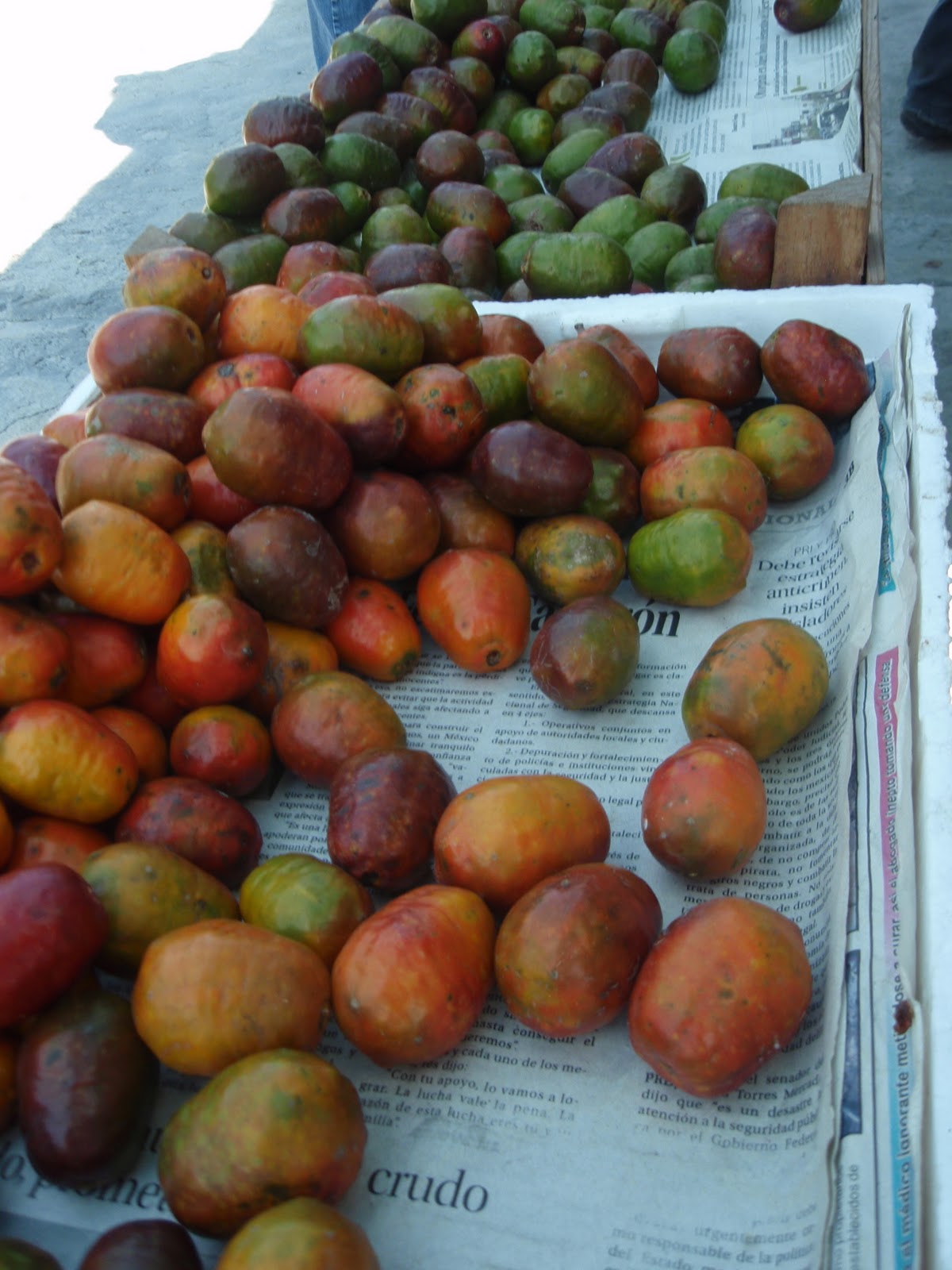
Cactus fruit (tuna).
"One too many will plug you up."
Celaya, Mexico.
Kara and Magic fruit.
Sherbet-like flesh with large brown seeds.
Celaya, Mexico.
Pan-fried Caterpillers
Tlaltizapan, Mexico
Mystery fruits. Very bitter!
Celaya, Mexico.
Final words: "Los besos saben con quesos"
This is an expression taught to me by a local here. It literally translates to "kisses taste like cheese."  It is a funny rhyme, really, but I think I'll always remember my experience here as one big cheesy kiss. Seductive. Exciting. Flavorful. Mexico. 

Friday, October 8, 2010

Homecoming Eve

Its Friday night and I've filled my apartment with the smell of browned beef and onions. Next to fresh bread in the oven, this is one of my favorite scents (food-nerd alert)! Tomorrow morning when I wake up it will be a nice reminder of the wonderful chili to come. My parents, Tony and Connie, are driving down for a visit and will be arriving around noon, aka the middle of Badger football! It also just so happens to be the homecoming game versus Minnesota. I told my dad that if he chooses to wear his Gopher sweatshirt I won't be speaking to him for the entirety of the weekend. Actually I think the heckling he would get from the swarms of Badgers on campus would wear down any opponent's pride, driving anyone to switch into red camouflage! I've seen it happen.

But what better way to enjoy football festivities than hot chili and cold beer? My fridge is currently stocked with Capital Brewery Octoberfest, New Glarus Moon Man, O'so Brewery Hopdinger (new from Milwaukee), and a few cans of Hamm's for nostalgia. In the morning I will turn on my trusty crock pot and let the chili simmer during the time my parents are traveling. I think I will also toast up some sourdough bread and shred some swiss cheese for garnishing (why swiss? its all I have at the moment next to processed orange-something but I think it might work out nicely). And the best part, we don't have to worry about paying out the nose for a parking spot downtown.  The worst part, however, is that the game isn't available on my basic cable package and the weather is forecasted to be in the upper 70's! I think I'll just make sure the beer is extra cold and may even turn on my air conditioning. Chili is only good with a side of chill! It is probably how it got its name (and partly due to the capsicum plant). 

The recipe I used is called "Spicy Chili" out of the Joy of Cooking cookbook. The beef that I had on hand was so lean I added some olive oil. I also misread the recipe last night and scribbled down on my grocery list only half of what was needed for tomato products (sauce and stewed tomatoes) so I compensated by adding a can of tomato paste and extra water. I may add some beef bouillon at some point tomorrow. The amount of spices the recipe called for was a bit much, in my opinion, of the wrong flavors. It asked for heavy helpings of Italian seasoning, basil, and oregano. Although it called for chili spices, I added some dried chili pepper flakes, cumin, and molasses instead of brown sugar.  I feel like a chili should be less like an Italian tomato sauce and more like a hardy, spicy stew. Next time I would like to try using cubed steak and real minced peppers (serrano or chili piquin perhaps).  

Go Red!